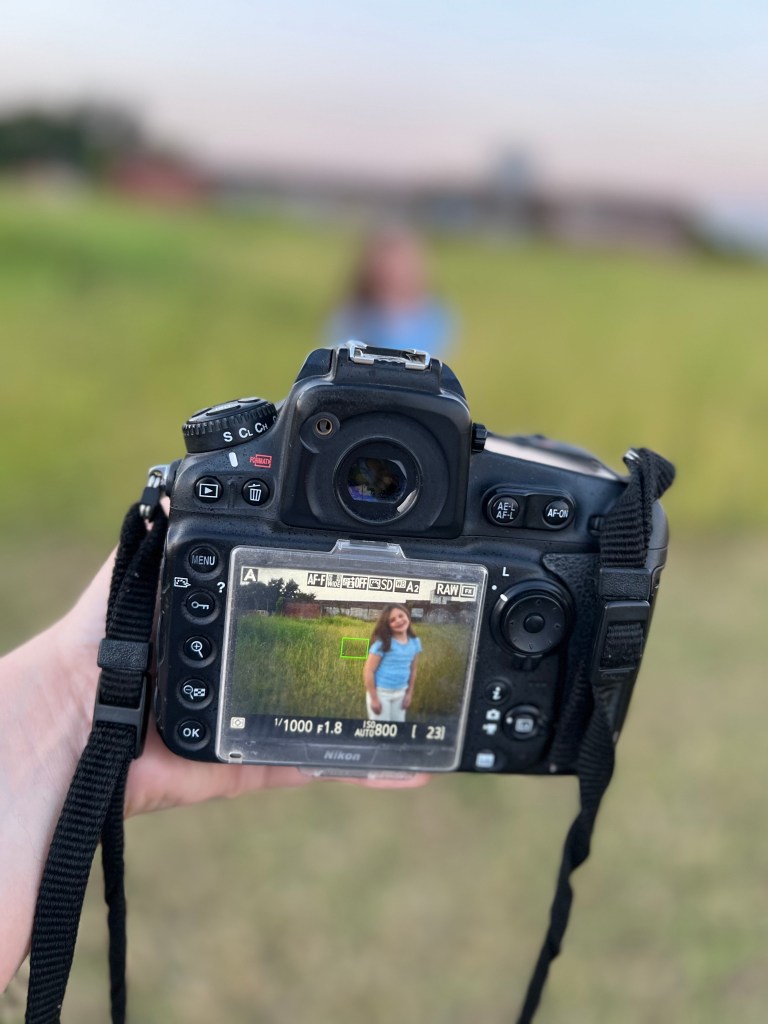
In the early 1980s, as a very small child, I found my inspiration in an unexpected place: the women in my life and their cameras.
As a kid growing up during that era with a small town point of view, I noticed that careers for women were limited, but one day I saw a lady working with a camera and thought, that’s what I want to be when I grow up!
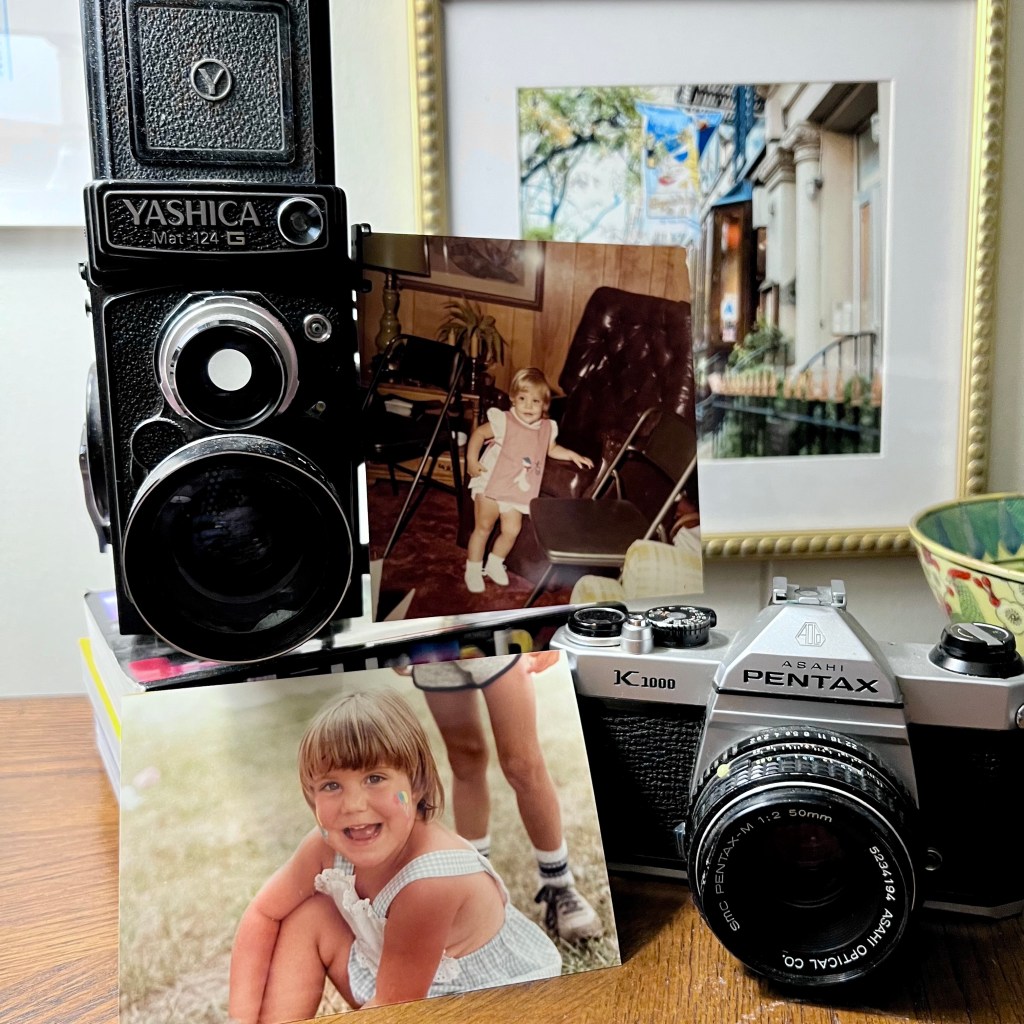
One of my first memories of my grandmother was looking through the viewfinder of her Yashica camera. Her eyes would light up as she peered through the viewfinder, framing scenes that told our family stories with her iconic “1-2-3” before pressing the shutter. I remember watching how she held the camera at her waist to view what she was trying to capture.
My mother, who also loved photography, treasured her Pentax camera. She had a great eye for light and color and I have so many priceless images of my childhood because of her. Whether it was a family holiday gathering or us outside in the yard, she was always behind the Pentax turning then ordinary scenes into my now extraordinary memories.
My favorite picture of myself of all time.
But it wasn’t just the women in my family who inspired me. Whenever I attended events around town during my early childhood years, there was always a well-dressed, professional lady with a camera and a pleasant smile. She was a photographer for our local newspaper, and she also seemed so happy with her camera that it left a lasting impression on me.
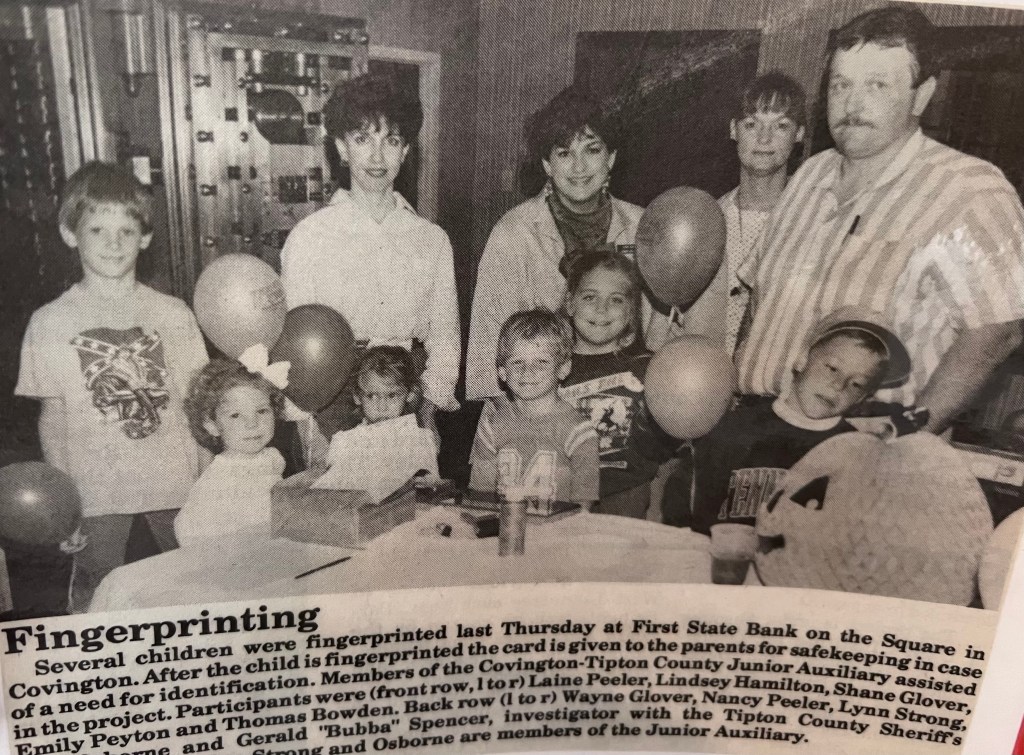
Photo by newspaper photographer, The Lady with the Camera.
Discovering that photography could be a profession was a light bulb moment. The idea that I could use photography to tell stories, capture memories, and make a living from it filled me with a sense of excitement. I set my sights on becoming the lady behind the camera.
Over the years, I honed my photography skills, and studied the art of it all. I learned how lighting makes the mood of the photo, composition is everything, and storytelling through images is what makes them interesting.
Today, I proudly carry the title of “The Lady Behind the Camera” in both my career and my community. I’ve spent my lifetime capturing the world through pictures.
Just last nightI photographed the 8th graders at our school for volleyball recognition and I realized that among that group I had taken 4 of their newborn photos and now they are all grown up.
As I continue to use my camera, my favorite part is the relationships I build with the people in front of my camera and the memories I get to help them preserve.
The ladies who came before me paved the way, and I have been blessed to keep the shutter snapping. Through photography, I have become a storyteller, a memory keeper, and a witness to the lives of so many amazing people!
“I can show them how to see, but Jesus has to open their eyes.” I chatted with a friend about my plans to teach art through my photography portfolio this school year.
C.D., 8th grade A lesson we learned about Van Gogh’s famous Almond Blossom painting and my “Dogwood Blossom, Quarentine” Photograph. The Bibilcal integration was a reminder about Aaron’s staff that blossomed like an almond branch and how the dogwood looks like a cross with blood at the four corners reminding us of Good Friday.
Emily Peyton Cook
Van Gogh
As a fourth year art teacher, I longed for meaningful lessons that could not only teach my students to see the beauty of God’s creation, but to be convinced without a shaddow of a doubt that He was for them.
Our students have been no strangers to grief this year. Young parents have died tragically on the heels of a tornado that ripped through the center of our town.
My fear has been that they will harden their heart towards Him, but my faith has spurred me on to enter this school year pointing to the goodness of God through the simplicity of my photographs.
One of our first lessons was a photo of a sunflower field. I thought of how Jesus taught through stories often pointing to fields and flowers. I decided to follow His lead.
Emily Peyton CookM.B., 7th Grade
Before having them draw the field along with me, I shared why I took the photo in the first place. I learned that sunflowers turn their faces to the sun. When they are staked to the ground and hindered from rotating towards the sun, they acutally shrink.
I told the students that fear does the same thing to us, makes us shrink back, where as faith makes us grow strong in the Lord.
When I was growing up, the benediction at my church included these words from Numbers 6, “The Lord make His face shine upon you.”
I reminded them that God’s face was turned toward them, just as the sun was in the sky every day, but they had to choose faith over fear, turn their face towards Him and flourish.
My goal as a teacher is to help them recognize true beauty, with the hope that they will respond by creating beauty in their corner of the world, but most importantly, glorify God through creativity.
It’s an act of faith for any teacher to diligently show up each day, over the course of years, planting seeds of truth and knowledge with the desire that the next generation will make this world a more beautiful place than we could imagine.
We are to help them discover their gifts and to help them learn how to use them. So, if you are a teacher today, be encouraged, the Lord sees your work and will reward it.
I was inspired by “God made a Farmer” by Paul Harvey, so I asked ChatGPT to help me adapt it for teachers, then I added my inside knowledge and writing pizazz from observing amazing Pre-K through 12th grade teachers all day, everyday, for 5 years. Here’s what we came up with.
Formated for Instagram Stories: “So God Made a Farmer” was a speech given by radio broadcaster Paul Harvey at the 1978 Future Farmers of America convention. The speech was first published in 1986 in Harvey’s syndicated column. The speech borrowed a few phrases from a 1975 article written by Harvey in the Gadsden Times, which was itself inspired by parts of a 1940 definition of a dirt farmer published in The Farmer-Stockman. The 1940 article was copied verbatim by Tex Smith in a letter to the editor in the Ellensburg Daily Record in 1949. The speech was given as an extension of the Genesis creation narrative referring to God’s actions on the 8th day of creation. Harvey described the characteristics of a farmer in each phrase, ending them with the recurring “So God Made a Farmer.” Wikipedia
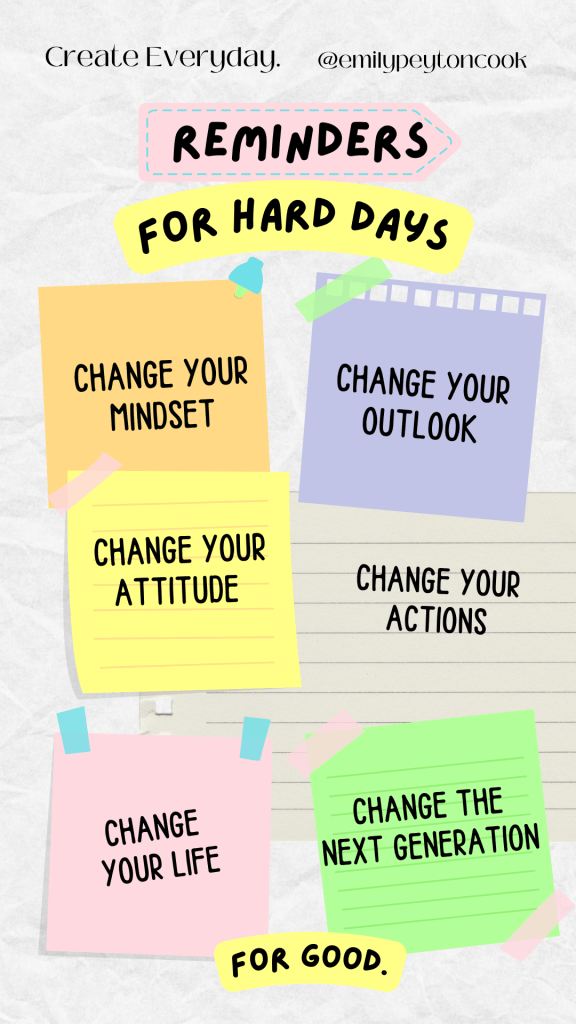
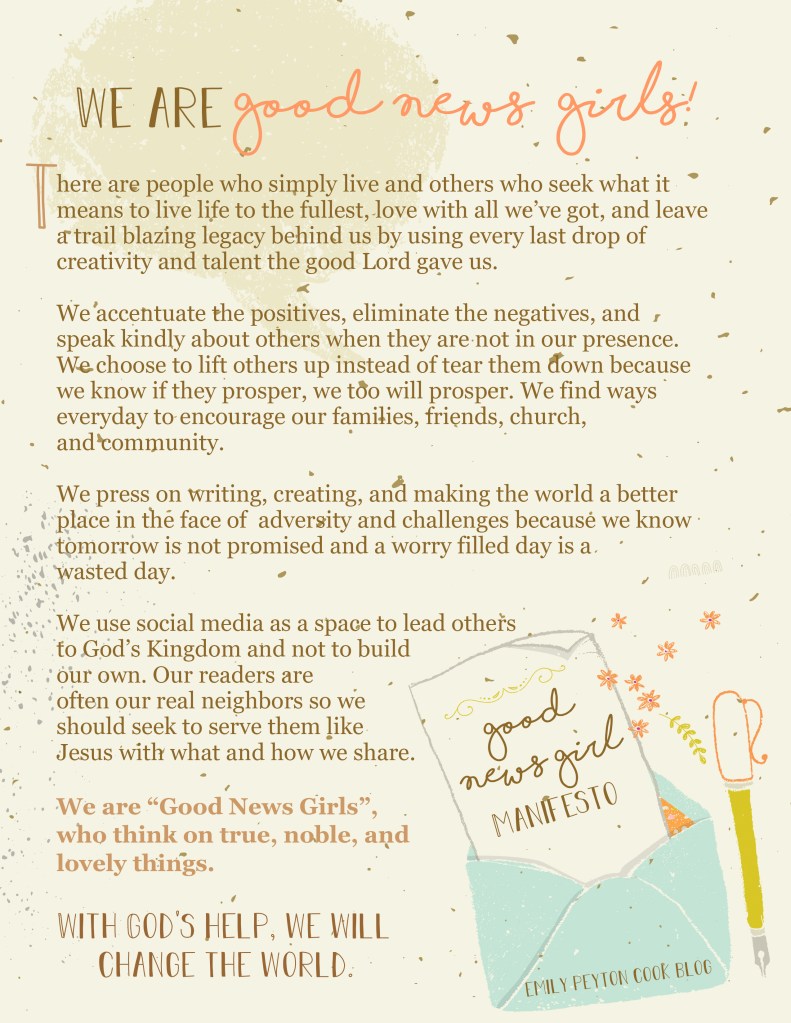
This week’s post was about using creativity to have a mindset shift. Creating everyday is not just about literally creating something with your hands every day, I know not everyone is cut out for that, but it’s about creating your outlook everyday.
How can you add to the beauty of your community by leaning into your “you-ness” right where your two feet are today?
I don’t know what that is for you, but for me it has played out in different ways, through art, photography, teaching, and testifying to God’s goodness in my life while also trying to keep a positive attitude.
This can be a journaling prompt, or if you want to respond to the question in the comments, you might be an encouragement to someone here today.
Living in this world is not always easy. We all face our own personal struggles and not even the most perfect location is without a downside. It’s our choice how we make the best of what we have to work with and sometimes it just starts with a fresh perspective.
We can be the part of our towns that make things better for those who live around us.
In a world that never stops moving, where every moment seems to slip through our fingers “like sands through the hourglass,” it’s important to step back and reflect on the world around us.
Joan Didion once said, “I write entirely to find out what I’m thinking, what I’m looking at, what I see and what it means. What I want and what I fear.”
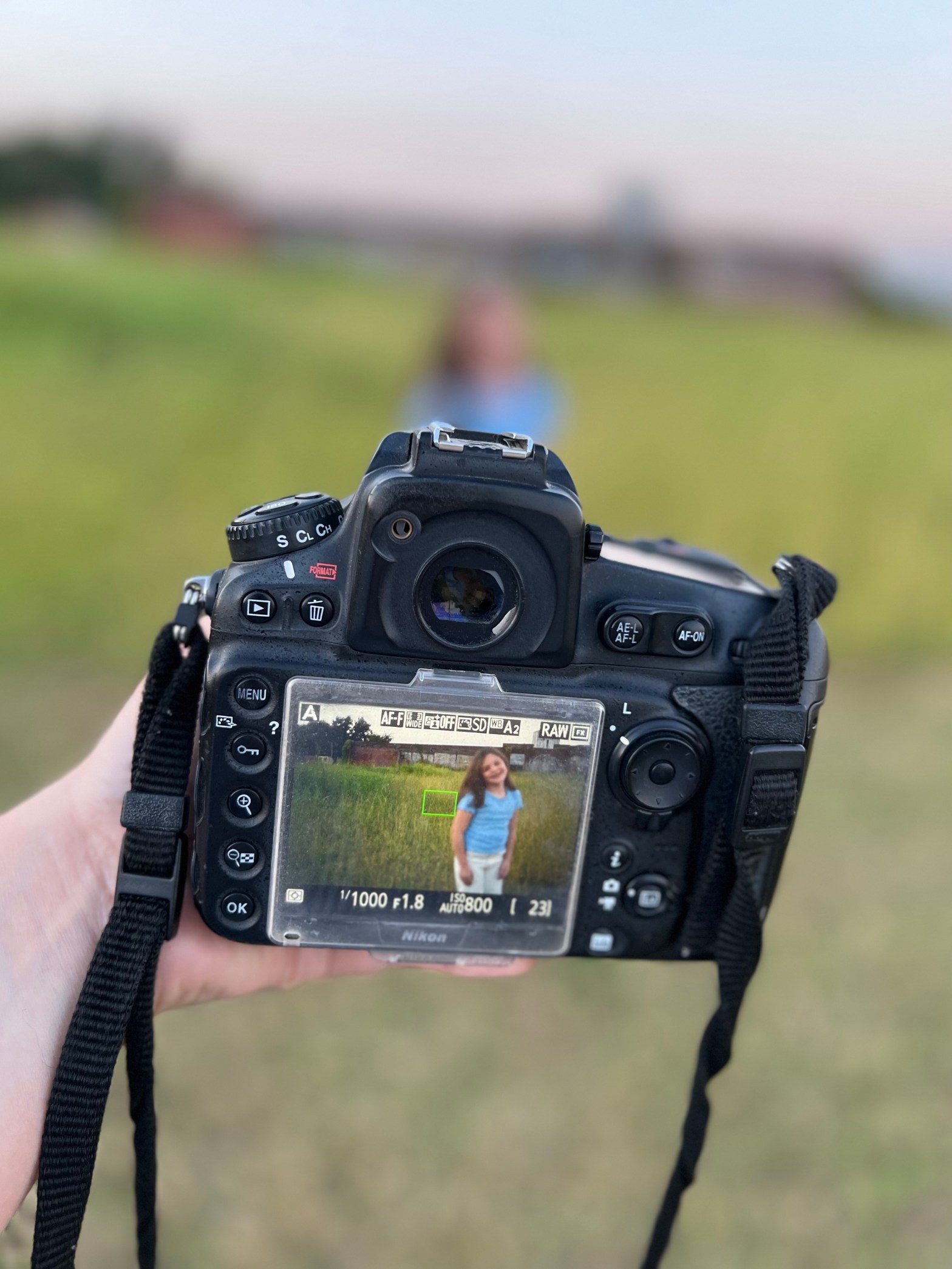
I find that I take pictures to figure out what to write, and from there how to think about it. I use photography as a tool to slow down, notice my surroundings, and capture the moment.
With a camera in hand, we have the power to freeze time, to hold onto a fleeting moment, and pause to actually think beyond the surface.
In day to day life as I’m driving around town I notice things that may bother me. If I’m not careful, those thoughts can turn into negativity.When I use my camera to capture both sides of the coin, so to speak, it gives me the perspective I need to see beauty in the ashes.
Just as a writer seeks to find meaning in words, I seek to find meaning in images.
What catches my eye?
How does it make me feel?
By rolling these questions around in my mind, things become clearer.
Photography allows me to notice the details that often go unnoticed—the way sunlight casts warmth like a blanket over my worn out town at dusk, the quick sparkle of laughter in my child’s eyes, the patina of an aged building, or the dancing shadows from a nearby tree on a peeling mural.
We can use photography to learn to see not only with our eyes but also with our hearts. It helps us tell the whole story. In contrast to those flawless Instagram home photos, where one area is meticulously decorated like a page from a magazine, but all the mess and outdated furniture are conveniently cropped out, capturing the essence of life in today’s small-town America demands an unfiltered lens that portrays both the harsh realities and the resilient spirit, avoiding looking through rose colored glasses.
So, I encourage you to pick up a camera, or even just your smartphone, and stop to see what you need to see.
Allow the act of taking pictures to help you notice what’s around you, and to give you the space to process your thoughts and feelings.
I create through writing and photography to connect with the world in a more meaningful way. I invite you to join me as we discover the beauty of the everyday. You never know what you might learn when you are open to creativity.
This week’s search led me to contemplate the love/hate relationship that exists with small towns.
On Small Towns
“Don’t you think sometimes people are formed by the landscape they grow up in?” -Joan Didion
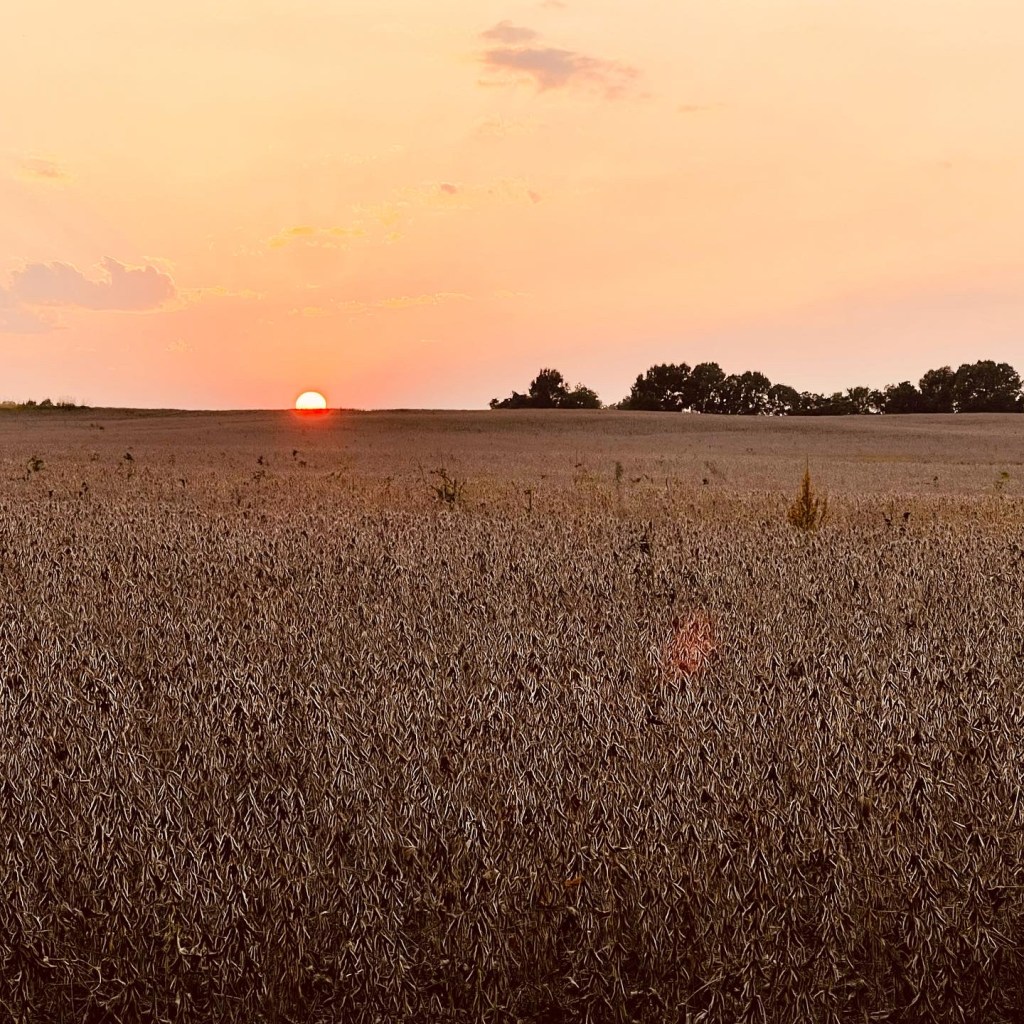
Sometimes on Sunday nights to chase the melancholy away, I chase sunsets on roads where beauty and poverty live side by side creating the tension of living in small town America.
“Kilimanjaro belongs to Ernest Hemingway. Oxford, Mississippi, belongs to William Faulkner… A place belongs forever to whoever claims it hardest, remembers it most obsessively, wrenches it from itself, shapes it, renders it, loves it so radically that he remakes it in his image.” Joan Didion
It feels as though the dirt under my feet holds my story and the stories of generations before who have called this place home.
But, if I tell the whole story,sometimes it is hard to live here. If you google news headlines about our town or search facebook for local conversation, you will find what seems to be a river of depravity and gossip whispered out loud with a dose of slander.
Yet what I know to be true is that there is an undercurrent of faith trying to lead us back to where we need to be, regenerated, revived, and renewed.
Anonymity. I sometimes wonder what it would be like to live somewhere where no one knew my name. I went inside a big box store on vacation and left there with my groceries and a surprisingly lonely feeling that I didn’t bump into anyone from elementary school. It left me wondering if I could ever get used to that?
Would l become relieved to be lost in the crowd of a big city or long to be back with a people who are connected to me by shared memories and nostalgia, never going anywhere without recognizing everyone and being recognized? My town was “linked in” be for LinkedIn was a thing.
“Living in a small town…is like living in a large family of rather uncongenial relations. Sometimes it’s fun, and sometimes it’s perfectly awful, but it’s always good for you.”
Joyce Dennys
“Most of my life, I’ve lived in fairly isolated spaces. Small towns. Not necessarily where everybody knows everyone explicitly, but there’s a sense of the wires of connection between you and the people you interact with. Where I grew up, even if I didn’t know the person, I had some sense of the degrees of separation between me and them. And so I think it was a little anxiety-inducing as a child because I always had a sense that my actions had reverberations that I could chart more than I could have in a city. So it impressed upon me that, even within this isolation, there was a slightly tighter constraint placed upon me and fewer places to hide within that constraint. So even this small, isolated, rural space still felt big and overwhelming. I think that shaped me in my creative process. I’m always seeing something small and trying to figure out if I can make it smaller. I’m trying to find a place to wiggle into.”
Kevin Wilson
“The simple truth is that you can understand a town. You can know and love and hate it. You can blame it, resent it, and nothing changes. In the end, you’re just another part of it.”
Brenna Yovanoff
Excerpt from the still untitled novella I’m working on: Everly looked towards her little sister and out her window, “Nothing to see here…” she giggled. Barren rows and rows of turned over dirt where cotton once was streched as far as the eye could see. The fields were topped off with beige skies and tractors transitioning from farm to road slowing their progress most days.
Soon the familiar buildings and worn storefronts rolled by as they made their way through the town’s main street. The morning fog blanketed the town, making it seem even more dreary than it was. But to Everly, it was home.
This is a sample passage from the memoir I’m writing called “When Tomorrow Starts Without Me,” a non-fiction book that has a theme of waking up to various forms of lossthroughout my life and how I persevered with my faith in tact.
If the theme of September 11 was the loss of American innocence…
The theme of the 12th is resilience.
In the years leading up to September 11, 2001, America felt like a place where safety was almost taken for granted. It was as if we believed we had an invisible shield protecting us from bad things happening here. We thought that war zones were far away, not on our backyards. It was a time when we could live our lives without constantly worrying about our safety, and that secure feeling was part of what defined my childhood.
What happens when you wake up one day under the blue skies of a seemingly safe world, but then it unfolds into another reality? What happens when you wake up tomorrow with innocence lost in yesterday’s wake?
Living in America at the turn of the century was a hopeful time. I was in college, and my generation was excited about all of the emerging technology and the career opportunities that were promised. But one crisp September morning, our attention was taken away from ourselves and onto the smoke filled city skies on our TV screens.
I was focused in my graphic art class, rolling the mouse around the screen while the printers hummed on the third floor of that old Mississippi building. The room, reserved for the art department, was where we worked on projects with our discmans playing Sarah McLachlan and Counting Crows on our headphones.
As I focused on my design project, a familiar voice began to creep through the walls—the voice of Peter Jennings, whom I usually heard on the evening news. But this time, his live broadcast on the radio at the 8:00 a.m. hour grabbed my attention, making me wonder what he was reporting.
“There is chaos in New York at the moment,” he reported, his voice serious, making me listen more closely. “I don’t want to call it an attack just yet.”
His words weighed heavy on my heart. I logged out of my computer and walked down the hall, deciding to get some fresh air and coffee at the student union. I thought maybe there I could get a visual on the TV.
I entered the union and joined other students gathered around the screen. The voices of everyone filled the room as we all questioned what we were seeing, unable to believe it. We were all thinking it must have been an accident.
This is the best portrayal to the shock I felt that day. The audience reaction, Kelly’s reaction, and Regis trying to explain it away. It was so unlike anything any of us ever experienced.
Little did we know, we were witnessing history. The news continued to unfold, and as the world watched in horror, the reality of the situation began to sink in. The iconic twin towers, a centerpiece of the New York skyline and backdrop of numerous movie scenes, had fallen. We remarked that it looked like something out of a Hollywood blockbuster. How could this be real?
The shockwaves of the attacks rippled far beyond New York. Reports of the Pentagon being hit and a plane crashing in Pennsylvania heightened our fear that we were under attack. It gave me an eerie feeling wondering who or what might be hit next.
In the days and weeks that followed, the world was changing before our eyes. Air travel, once exciting, became anxiety-inducing with long wait times due to heightened security measures. Fear of the unknown filled our minds, and the innocence we had taken for granted was gone.
But amidst the uncertainty, resilience emerged. Acts of kindness, faith, and service in the days that followed filled our nation with hope. We were unified, one nation under God. Churches were full and people were looking to faith in God to offer hope in the darkness.
For me personally, it felt as strong of a sorrow as a death in my family and just having been through my own personal tragedy, the sudden loss of my best friend, I knew to turn to the Lord in prayer and faith that He would work it all out for our good. It just took my cooperation to get up and face the next day.
Looking back on that September morning, I am reminded that life can change in an instant. There is no trouble free tomorrow promised. The world may have changed, but we found the courage to get up and face the future with the lessons we learned that day.
How Artists Responded to 9/11
Artists are the heart of America. We have the superpower of feeling what others are feeling in a more intense way. If you’re not careful though, those feelings of melancholy, can turn into depression if not channeled into artistic expression. We were meant to share our gifts as balm for our communities and our own souls.
Here’s where a few various artists put their 9/11 feelings.
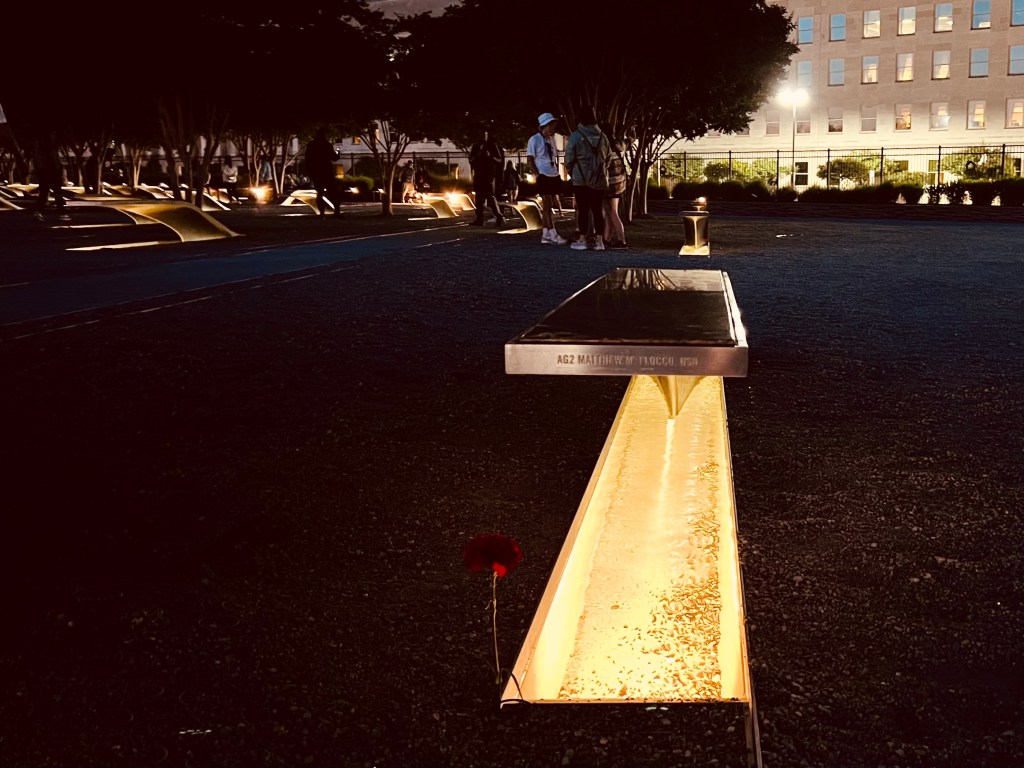
The Pentagon Memorial is so beautiful and symbolic.
Journaling Questions:
I encourage you to keep a record of this day and your experiences on 9/11 for future generations to read.
How does your faith guide your response when you witness suffering or injustice in the world?
In moments of tragedy or crisis, do you find help in prayer, and if so, how does it impact your outlook and actions?
Reflect on a time when your faith was challenged with a world event or personal circumstance that made you question your beliefs. How did you find resolution or clarity?
You have been reading a sample passage from the memoir I’m writing called “When Tomorrow Starts Without Me,” a non-fiction book that has a theme of waking up to loss in it’s various forms throughout my life and how I persevered with my faith in tact. This chapter will go on to highlight the various ways Americans have continued through many trials since 9/11.
Have you ever stopped to think about the power of your everyday creative choices? In a world that often highlights the negitive, it’s easy to overlook the beauty that lies in the simplicity of our daily lives. But what if I told you that your daily routine could be a canvas for creativity, and that you have the agency to paint it with the colors of your own imagination? Today, let’s explore the idea of creating everyday, every day, and how this simple mindset shift can lead to a more beautiful life.
Life is a series of choices, both big and small, that shape the story of our lives. These choices are like the building blocks of our days, and they offer us the opportunity to add beauty and creativity daily. It’s not just reserved for artists, writers, or those with specific talents; it’s a gift that I believe God gave us all.
Consider the color of the walls of your home, the arrangement of your bookshelf, the words you choose in a conversation – these are all moments where your creativity and style can shine. Whether you’re into art, writing, sketching, homemaking, decorating, baking, or anything else, these choices can become your outlets for self-expression.
So, how do you discover your own creative outlet in the midst of your daily grind? It’s a process that begins with curiosity and looking from within. Start by asking yourself what activities lift your spirits? What do you find yourself daydreaming about when you’re washing dishes?
Your creative path might not be obvious at first, but it’s there waiting for you to uncover it. It could be the fun of putting together a delicious meal for your family, capturing the world through your camera lens, or even writing a letter to a friend. Your creative outlet is a reflection you and it’s worth exploring.
Now, let’s get practical. How can you start adding more creativity into your everyday life, starting right now? It’s not about changing your entire routine; it’s about making small, intentional choices that make a difference.
Take a moment to get up early and pay attention to the taste of your morning coffee, maybe experiment with a new recipe for dinner tonight, go outside, slow down, and really watch the sunset (or dawn before the sunrise) to give you a new perspective. Maybe it’s rearranging your living room furniture this weekend to create a cozy atmosphere for the new season or simply jotting down your thoughts in a journal.
The wonder of it all!
Big Idea: The beauty of life lies in the details, in the small choices that we make every day. As you go about your day, remember that you have the power to create a more beautiful life, one choice at a time. Choose to see the good in unlikely places.
Let me share the story of two special women in my life, my grandmothers, who have left their mark on me. One found contentment in life’s simply working with her hands to create as a seamstress. The other, driven by her work ethic, lived with intention to create a life she wanted for her family. These two extraordinary women, with their contrasting yet equally inspiring lives, have shaped my belief that every day is an opportunity for purpose. God sprinkled parts of each of them into my personality and I’m so thankful!
My maternal grandmother, the sweetest soul, lived a life defined by contentment. I never went a day without knowing she was immersed in some form of creative endeavor. Whether it was retrofitting a pattern to mimic a dress we saw in a catalog, finishing a crossword puzzle, or at her sewing machine working her seamstress magic, she found joy in the act of creating with her hands. To her, creativity wasn’t just a hobby; it was a way of life. Her days were filled with her imagination and encouraging others, and she left a legacy of beauty in everything she touched. She taught me that working with my hands could be a source of happiness and it’s a lesson I carry with me every day.
On the other side of my family, my paternal grandmother, who bubbled with joy and laughter, was determined and ambitious. She worked and invested to ensure her family had access to a better life. Her sacrifices were not in vain, as her commitment eventually paved the way for her 4 granddaughters to attend college and pursue their dreams. Her life was a testament to the power of specific choices and hard work. She taught me by her life that every decision, no matter how small, could shape the future, and that setting goals and putting them into action is the key to success.
Enjoy this FREE iPhone wallpaper for being a loyal reader. Just save to your camera roll.
The lives of these two incredible women serve as constant inspiration for me. My content and creative grandmother reminds me that beauty can be found in the everyday, in the act of creation itself. It costs nothing to use your imagination and you can be creative no matter where you are or what season of life you are. While my determined and hardworking grandmother taught me that even the smallest choices, when made with purpose and intention, can have a profound impact on our lives and the lives of others.
As I navigate my own path, I strive to blend their wisdom into my daily life. I seek to choose creativity in the mundane, just as my creative grandmother did, and I seek the diligence and focus of my other grandmother into my aspirations. I’ve come to understand that every day is an opportunity to make choices that not only add beauty to our lives but also shape our future. These choices have the power to transform our existence into a masterpiece.
So, as we embark on this day, I invite you to reflect on the lives of those who have inspired you.What lessons have they imparted? How can you apply those lessons with purpose and intention into your daily choices?
Remember, the canvas of your life is waiting for you to get the courage to begin creating, and each choice is a layer that contributes to the finished life you’re making. Let’s make today a day filled with purpose and creativity – for me today was stopping to consider my grandmothers who came before me and who are a gift to the generations yet to come because they lived creatively.
I’ve often compared my creative energy as a teacher using these visuals that are etched into my mind from watching Cinderella over and over as a kid. On Sunday nights I say to myself, “When I come home from school tomorrow Cinderella’s carriage (my creative brain) will be back to being a plain old mushy pumpkin (my brain with mom/teacher exhaustion).”
When you’re in the flow of creativity, there is not a better feeling in the world, but it takes lots of mental clarity to get there. I find lots of joy in working on my personal projects, but I’ve learned not to frustrate myself with trying to further them after school in the afternoons. I just spin my wheels.
After six years of teaching, I’ve figured out that creative energy is limited each day so I pour it all out on my students at school (and I am grateful to do so). What an opportunity!
I share all of that to give you an update that on this long weekend I had some rest and some uninterrupted time to build upon what I started writing this Summer.
I was able to write 20,000 words between two books this Summer, one a memoir and one a fiction book. After some research I decided to make my fiction book into a Novella (which requires 20,000-40,00 words) since I can currently average that much writing over a long school break. With that goal in mind it would be feasible to work on one novella a Summer if inspiration strikes.
Instead of having one big book, I will be able to write 4 shorter Novellas to make a collection of stories that tie together if I decide to keep writing fiction after this book is complete.
So, this weekend I finished my first draft of my first fiction novella!
So the hard part for me personally is done. The word count is there. The scenes from my outline are all written out with dialogue and in order like a rough sketch on a canvas ready to add layers of paint.
So, the fun starts now! I get to take all of those broad strokes and zoom in to write the sensory details, add in depth from the notes I’ve been keeping on the go, and bring the characters to life as I continue to develop their voices and their messages.
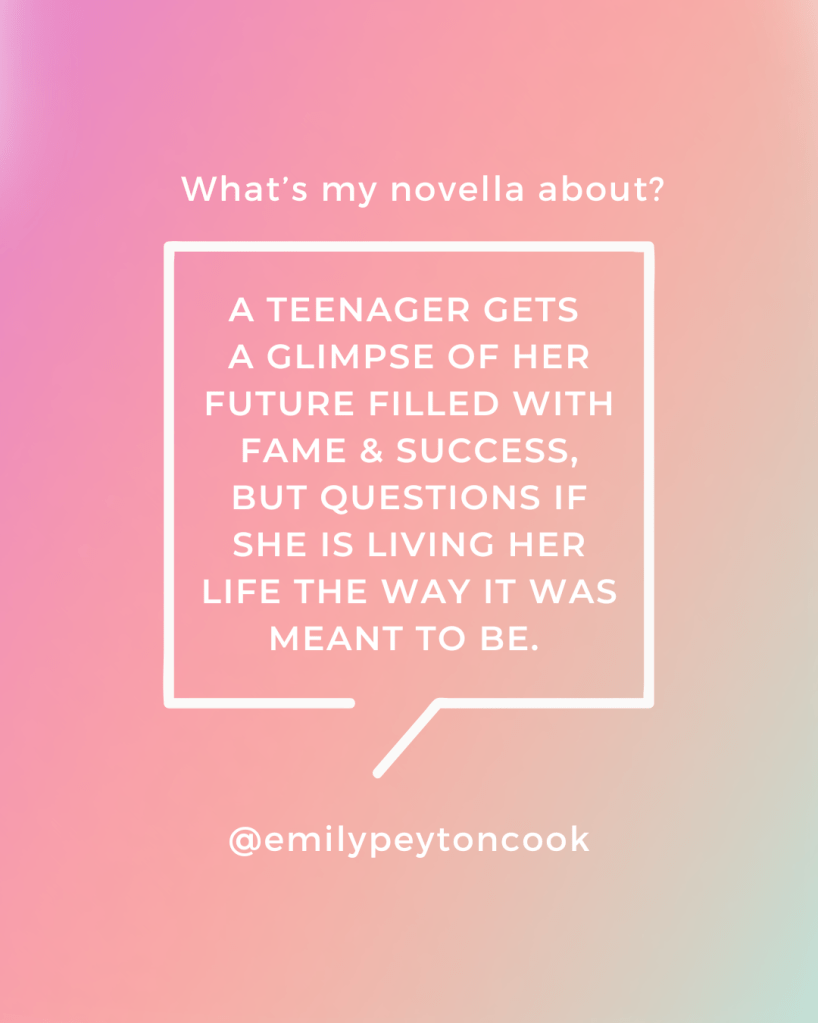
So, after all this chatter, what’s this book about anyway? Simply stated as a quick elevator pitch that I finally feel confident to share, my book is about:
What’s next?
Developmental Editing
Beta Readers
Line Editing
Proofing for Print
So, as you can see, I have a way to go before publishing and haven’t set a date yet. But I am excited about the confirmations that I have received to keep on writing this story.
One happy writer to meet a 2023 goal before Summer’s end!
One of the steps in finishing out my first draft led me to search the most googled questions asked by 12-18 year old girls (my target age for this book) and to my delight almost all of the questions they ask are addressed in my novella. I think I’m on the right track.
Thanks for following along with my creative process. I hope to inspire you to find what makes your heart sing!
I’m 2 sleeps from back to school. My last day of Summer break is tomorrow. I’ve gotten a lot accomplished this Summer in my writing. I’m trying to meet a few more goals this week before I get back to teaching art full time.
I’ve made the most progress on the themed memoir I started in January. I think this is because it’s the genre I’m most experienced in as a writer. It comes easy to me so, I’ve decided to set aside my fiction for a bit and finish these 45,000 words so that I can at least have a first draft of a long form book finished in August!
I had several confirmations, one that I wrote down in my journal from a co-worker at the end of May. It was one of those moments that stopped me in my tracks for a moment because she recognized something in me that I didn’t see for myself. She said it out loud, I took it to heart, I took note of it and revisited her words today.
What she was conveying in the conversation was that I pointed people to see the bigger spiritual picture.
Another friend was helping me decide my next steps with my writing and she told me she had a printable that I made in 2020 (that I’d forgotten about). She told me to revisit my words. This put me on a similar path back towards prioritizing the memoir.
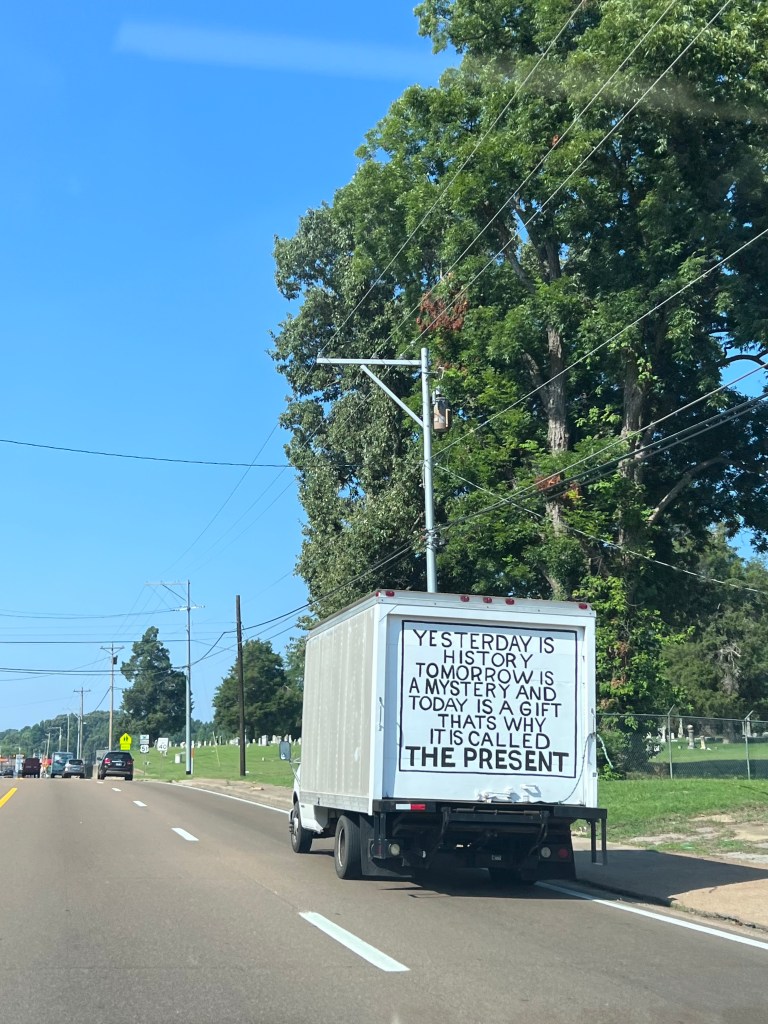
Then, the quote that I had written months ago right smack dab on the first page of this manuscript was plastered as big as a billboard right beside me on Hwy 51 last week. I got the hint and the God wink that this was my third reminder that I needed to revisit the memoir.
As I drove to Ripley one day this week, it dawned on me that my whole life creative ideas have flown through the open windows of my mind. My brain works much like those old Pop Up Videos from the 90’s on VHI.
Just like right now, I have three great book ideas started and two of them pretty far along. If I’m not careful though, my brain gets too jumbled, overwhelm sets in, and I get fearful of sitting in the chair to write because I don’t know where to start.
This is how my brain feels when I’m driving, washing dishes, folding clothes, etc. when I’m in the middle of a creative project.
So, today I made some more headway on the memoir and have a plan and word goal for each day of August and a reminder to myself at the top of the page to keep it simple!
As a creative writer, one of the biggest challenges I face is figuring out the best way to tell my story. I’m sure many of you can relate. Do I start with a prologue or jump right into the action? Should I use a linear timeline or flashbacks? How many perspectives should I include? These are just some of the questions that I contemplate.
Because I often have numerous ideas floating around in my head, I’ve found it helpful to plot out my story three ways. I’ve found that it helps develop the story, plus make it better and gives more material to pull from as you refer back to it when you get stuck writing.
After bullet pointing the general story on one sheet of notebook paper, I take a couple of pieces of notebook paper and draw 2 lines to make 3 columns. I then writhe the story three different ways.
Step 1: The Linear Plot
The first thing I do is write out a linear plot of my story. This means starting at the beginning and moving through the story in a chronological order. I try to include all the major plot points and character arcs in this version.
This helps me get a sense of the overall structure of the story and identify any pacing issues. It also helps me see if there are any gaps in the plot or if certain events feel rushed or dragged out.
Step 2: The Nonlinear Plot
Next, I write out a nonlinear version of the plot. This means jumping around in time, using flashbacks, or other techniques to create a more complex narrative structure. This version allows me to experiment with different ways of revealing information to the reader.
Sometimes, I find that the nonlinear version is more interesting and engaging than the linear version. Other times, I realize that it’s too confusing or doesn’t add anything to the story. Either way, this version helps me think outside the box and consider different ways of telling the story.
Step 3: The Character Plot
Finally, I write out a version of the plot that focuses on the character arcs. This means looking at the story from each character’s perspective and seeing how their personal journeys intersect with the larger plot.
This version helps me make sure that each character is fully developed and has a clear motivation. It also helps me see if any characters are unnecessary or underdeveloped. I then can go back and adjust my chapters to fit the way I will tell the story.
By plotting out my story three ways, I’m able to see the strengths and weaknesses of each version and choose the one that works best for the story I want to tell. Sometimes, I even combine elements from each version to create a unique and compelling narrative.
If you’re a writer struggling with how to tell your story, I highly recommend trying this process. It may take a bit of extra time and effort, but it’s well worth it to find the best way to bring your story to life.
Thanks for reading, and happy writing! Em
Morgan Harper Nichols had a timely post on this topic just this week! Love her art and words!
These essential tips for world building that will help you create a realistic and immersive world for your readers!
Photo : Native Union Pop Phone
I’m continuing my series of documenting my writing process as I write my first coming of age novel.
When it comes to writing a successfully written novel, one of the most crucial elements is crafting a believable and engaging world. This is especially important for coming of age fiction (my novel is set in the mid 90’s to present day) where capturing the mood and vibe of the time period is essential to connecting with readers.
To get started on creating your world, research is key. Familiarize yourself with the technology, fashion, and cultural norms of the time period, and consider what makes it unique. This will help you craft a setting that is not only accurate, but also resonates with readers.
I use Pinterest for this as well as printing out actual photos or copying them from era magazines and placing them on an actual bulletin board on my desk. I pull quotes that sound like something the characters would pin. This helps me develop their personalities and when I get stuck in writing, I go back to build my Pinterest board with more ideas.
I pull quotes that sound like something the characters would pin.
Once you have a solid understanding of the time period, it’s time to focus on building out the world of your story. Begin by creating a strong sense of place – think about where your story takes place, the landmarks, and the people who inhabit it. This will help ground your story in reality, making it feel more authentic and relatable.
Next, focus on creating realistic and well-rounded characters. Create a character profile. I like to create a mock interview with each character to brainstorm ideas for their personalities. Consider what makes them unique, their interests and goals, and how they interact with each other and the world around them.
I watch youtube videos of celebrity interviews from the era to get inspiration for questions for my characters as well.
Remember everyone has an internal conflict (goal vs. fear) so identify theirs. This will help readers connect with and care about your characters, making them invested in the story.
Finally, pay attention to the small details that make your world come alive. From music to slang and colloquialisms, these details help paint a picture of the time period and create an immersive experience for readers.
For each book I’ve written I’ve created a soundtrack to help inform the book. This is the first novel I’ve written so I picked out a couple of songs for each chapter to keep me focused on the story and feel of the outline. I’ve rearranged the order of this playlist multiple times as the story has evolved.
Take a listen to see if you can figure out any clues about my story.
Incorporating these tips into your world building process will help you create a captivating and authentic world for your coming of age novel set in whatever era you decide to write. If you’re a reader and not a writer I hope this post gives you a little behind the scenes of how authors do what they do to create your favorite beach reads!
Happy writing or reading,
Emily
Writing Update:
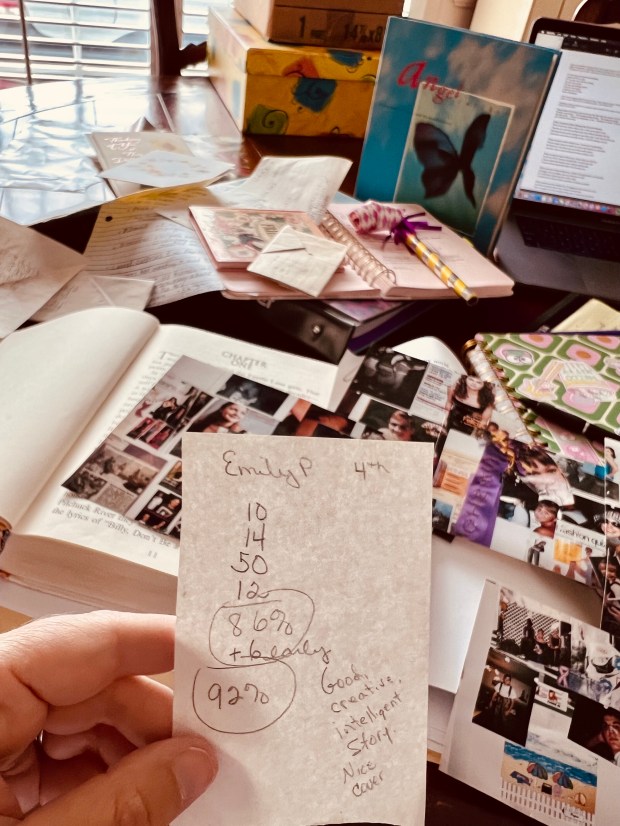
Writing Update: The first draft is telling the story to yourself. (I took finding a writing grade and encouraging words from my teacher from 10th grade as a sign to keep going 😄)
I haven’t met my daily word count goal this Summer (I’ve written 12,000 so far), but I have been reading fiction widely and jogging my memory on lots of 90’s and early 2000s nostalgia (all of this inspiring content for the chapters that live in notebooks and in my mind). I keep telling the story to myself and adding to it.
I’ve taken time to go through boxes that I put away in heartbreak at 17 and have cried healing tears at 42.
This fictional story won’t leave me and is inspired by the people and places I loved in my coming of age years. It’s written about a time in history that we’ll never be able to visit again except in our memories. Conveying that nostalgic feeling is what I’m after!
Yet…if nobody ever reads this first attempt at a novel, exploring this story, revisiting the 90s in my mind, and developing these characters has been good for my soul.
Now, back to the page…and sharpening my skills of writing dialogue. 😬✏️
























 Create Everyday